
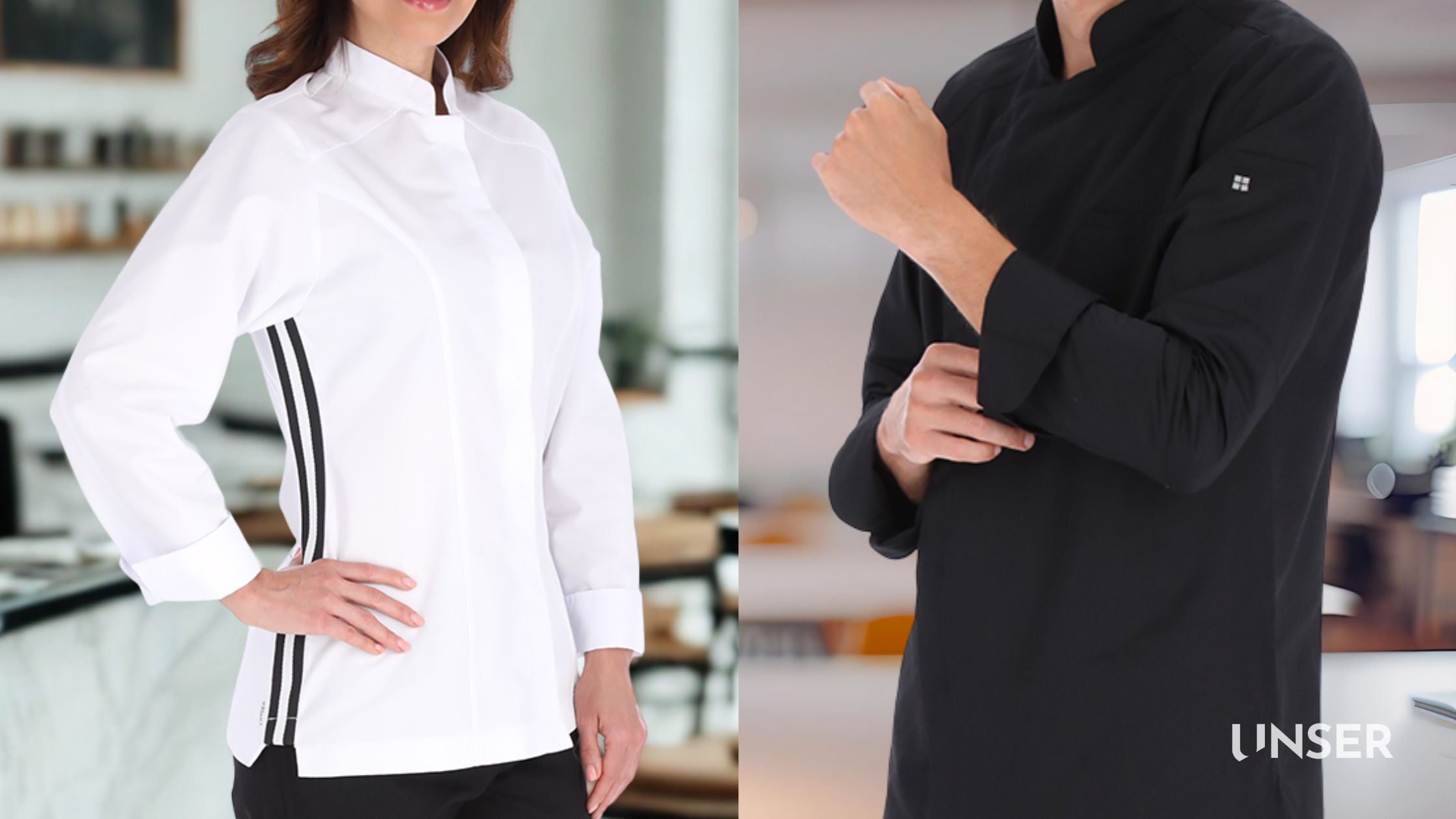
The challenge with standard U.S. sizing
Most chefwear is offered in broad jumps—S, M, L—that don’t account for real bodies or long, high-heat shifts—the result: tight shoulders, baggy waists, rolled cuffs, and constant adjusting on the line.

In-Between Sizes, explained
UNSER offers in-between sizes (e.g., SM and ML) to bridge the gaps standard charts leave behind.
-
SM = between Small and Medium
-
ML = between Medium and Large
These half-steps reduce compromise. If you’re broad through the shoulders but slimmer at the waist—or right between sizes—you can select a size that actually matches your frame.

The fit advantage
Better fit shows up everywhere:
-
Comfort: less pulling at the shoulders; cuffs sit where they should.
-
Performance: move freely, focus on service—not your sleeves.
- Presentation: a clean line that looks sharp in open kitchens and FOH moments.

Size chart + how to measurez
Grab a soft tape and measure over a light layer.
Chef Coats/Jackets
-
Chest: fullest part, tape level.
-
Shoulder-to-wrist: for sleeve length (turn-back cuffs add flexibility).
-
Compare to our chart; if you’re between sizes, choose SM/ML as appropriate.
Chef Pants
-
Waist: where you wear the pants in service.
-
Inseam: inner leg to desired hem.
-
Choose your closest match; note any fit notes on the product page.
Aprons
Most are one size with adjustable ties/neck; check product notes for length.
Confidence in your fit
If you’re unsure, send us your typical U.S. size and key measurements via chat—we’ll recommend the best option. Many chefs find their ideal fit in SM or ML once they compare measurements; it’s a small change with a big impact on comfort and polish.

Share:
Premium Chefwear Trusted for 70 Years: From Mexico to Dallas
Who We Design For: The Modern Chef & Restaurants That Value Presentation